
Polypropylene Felt Filter Bag: Efficient Liquid Filtration for Industrial Systems
In many industrial environments, maintaining consistent liquid filtration is essential for ensuring product quality and protecting downstream equipment. As production demands increase, common challenges such as unstable filtration efficiency, short service life, and limited chemical resistance become more evident. A polypropylene felt filter bag is designed to address these issues by providing reliable particle retention, durable material performance, and compatibility with a wide range of process conditions.
Product Design Built for Industrial Reliability
A polypropylene felt filter bag is manufactured using needle-punched polypropylene fibers that form a thick, porous filtration medium. This structure enables depth filtration, allowing contaminants to be captured throughout the entire thickness of the material rather than accumulating only on the surface. As a result, filtration performance remains stable even as particle loading increases.
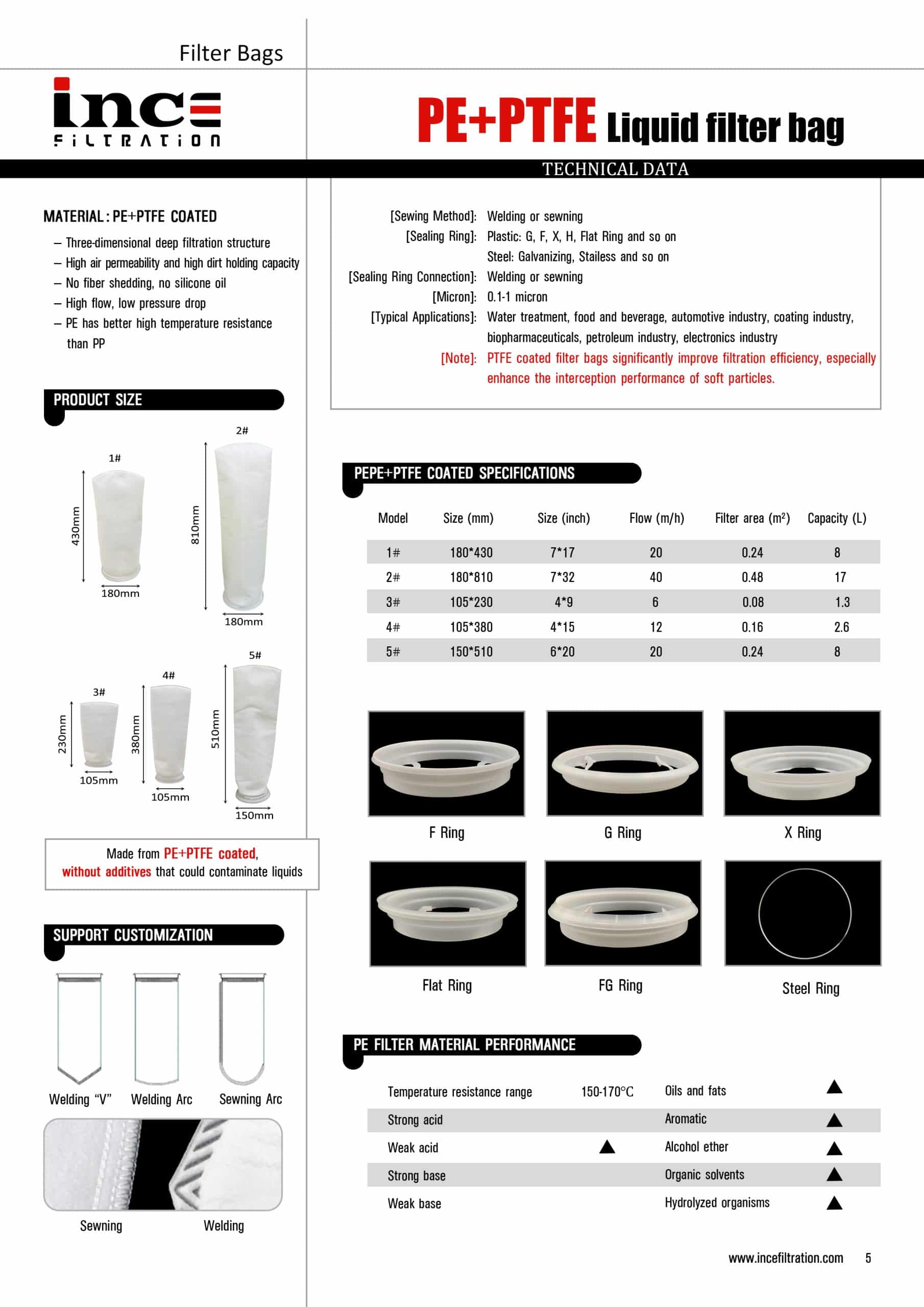
The material selection plays a critical role in its performance. Polypropylene offers strong resistance to acids, alkalis, and many chemical solutions, making the polypropylene felt filter bag suitable for demanding industrial applications. This chemical stability helps maintain the integrity of the filter bag over extended periods of use.
The design also includes secure sealing mechanisms such as plastic or metal rings, ensuring proper fit within standard filter housings. A well-sealed polypropylene felt filter bag reduces the risk of bypass and supports consistent filtration results under varying pressure conditions.
Key Performance Advantages
One key advantage of a polypropylene felt filter bag lies in its high dirt-holding capacity. The depth filtration structure allows it to retain a significant volume of particles before reaching its pressure limit, reducing the frequency of replacement and minimizing operational interruptions.
Another important benefit is its ability to maintain stable filtration efficiency under fluctuating flow conditions. Compared with surface filtration media, a polypropylene felt filter bag provides more consistent particle removal, even when process flow is not uniform. This contributes to improved process control and product consistency.
Chemical compatibility is also a defining feature. The polypropylene felt filter bag performs reliably in environments where exposure to aggressive chemicals is common. This reduces the risk of material degradation and ensures longer service life.
In addition, a wide range of micron ratings is available, allowing users to select a polypropylene felt filter bag that matches specific filtration requirements. This flexibility supports both coarse and fine filtration processes without compromising flow performance.
Suitable for a Wide Range of Industrial Applications
The polypropylene felt filter bag is widely used across various industries due to its adaptability and stable performance. In water treatment systems, it effectively removes suspended solids and helps protect downstream filtration equipment, contributing to improved water quality.
In chemical processing applications, the polypropylene felt filter bag is valued for its resistance to corrosive liquids and its ability to handle complex fluid compositions. This makes it suitable for different stages of production where reliable filtration is required.
For food and beverage production, maintaining consistent filtration is critical. A polypropylene felt filter bag is commonly applied in processes such as liquid clarification and ingredient filtration, supporting stable product quality.
In coatings, paints, and ink manufacturing, the polypropylene felt filter bag helps remove impurities and undissolved particles, ensuring a uniform final product. Its consistent performance reduces defects and enhances production efficiency.
Operational and Economic Value
From an operational perspective, a polypropylene felt filter bag helps improve system efficiency by reducing downtime associated with frequent filter changes. Its high particle retention capacity allows for longer service intervals, which can significantly lower labor and maintenance requirements.
The consistent performance of a polypropylene felt filter bag also contributes to protecting critical system components such as pumps and valves. By minimizing the passage of unwanted particles, it helps extend equipment lifespan and reduces maintenance costs.
In terms of economic value, the balance between durability and performance makes the polypropylene felt filter bag a cost-effective solution over time. Instead of frequent replacements, users benefit from extended usage and more stable operation.
Additionally, its compatibility with standard filtration systems means that a polypropylene felt filter bag can be easily integrated into existing setups without requiring major modifications, simplifying both installation and operation.
Customization and Quality Assurance
Different filtration systems require different specifications, and the polypropylene felt filter bag can be customized to meet these needs. Options are available in various sizes, micron ratings, and sealing configurations, allowing it to fit a wide range of filter housings and operating conditions.
Manufacturing consistency is essential to ensure reliable performance. A high-quality polypropylene felt filter bag is produced under controlled conditions to ensure uniform fiber structure, accurate dimensions, and dependable sealing. This helps maintain consistent filtration results across multiple uses.
Material quality and production standards are carefully managed to ensure that each polypropylene felt filter bag performs reliably under specified conditions. This level of quality assurance is important for industries where filtration directly impacts product quality and operational safety.
Closing Paragraph
For industrial operations that require stable filtration performance, strong chemical resistance, and long-term cost efficiency, the polypropylene felt filter bag provides a practical and reliable solution. Its engineered structure, adaptable configurations, and consistent performance make it a valuable component in modern liquid filtration systems.