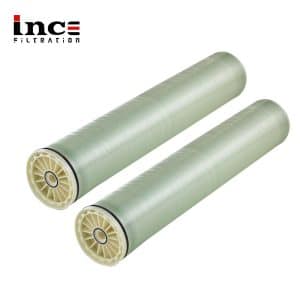
LP Reverse Osmosis Membrane Element for Stable Industrial Water Treatment
In industrial water treatment systems, membrane selection has a direct impact on operating stability, energy consumption, and long-term system reliability. Many applications require a balance between adequate operating pressure and consistent separation performance, especially where feed water quality and flow conditions fluctuate. Overly high-pressure membranes may increase energy demand, while insufficient membrane performance can compromise downstream processes. For this reason, procurement teams and system designers often evaluate solutions that operate efficiently within moderate pressure ranges. An LP Reverse Osmosis Membrane Element is commonly considered in such scenarios, as it provides dependable separation performance while supporting controlled operating conditions. Within this context, Reverse Osmosis Membrane technology designed for industrial use remains a foundational component in modern water treatment systems.
Understanding the Product and Its Design
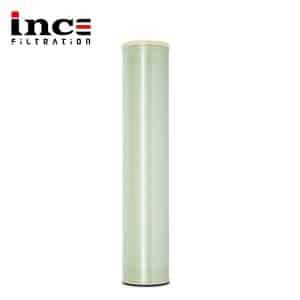
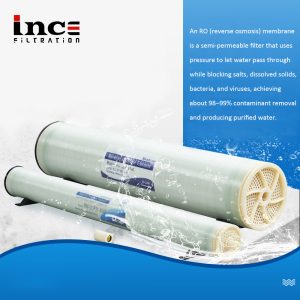
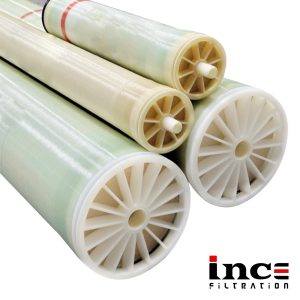
An LP Reverse Osmosis Membrane Element is engineered to operate effectively under low to standard operating pressures while maintaining stable salt rejection and permeate flow. The element is typically constructed using a spiral-wound configuration, where the membrane sheets, feed spacers, and permeate channels are precisely assembled to promote uniform flow distribution.

The membrane chemistry and structure are optimized to reduce resistance to water passage without sacrificing separation efficiency. This design approach allows the Reverse Osmosis Membrane to perform reliably across a wide range of industrial operating conditions. Compared with ultra-low-pressure membranes, LP designs emphasize durability and consistent output, making them suitable for continuous operation environments.
As an Industrial RO Membrane, this type of element is designed with mechanical strength and dimensional stability in mind. The outer wrap, end caps, and sealing components help ensure that the membrane maintains integrity under sustained pressure and repeated operating cycles.
Key Performance Advantages in Real Operation
One of the main advantages of an LP Reverse Osmosis Membrane Element is its stable performance under moderate pressure conditions. This stability allows systems to achieve reliable permeate production without requiring excessive pump pressure, supporting balanced energy usage.
Consistent rejection performance is another critical factor. In industrial processes, fluctuations in water quality can disrupt production if membrane behavior is unpredictable. An Industrial RO Membrane designed for low-pressure operation helps maintain steady water quality, reducing the need for frequent system adjustments.
From an operational standpoint, pressure drop characteristics are gradual and predictable. This enables maintenance teams to monitor membrane condition over time and plan cleaning or replacement based on performance trends. Such predictability is an important benefit of well-engineered Reverse Osmosis Membrane elements in industrial service.
Typical Industrial Application Scenarios
LP Reverse Osmosis Membrane Elements are widely used in industrial water treatment systems, including process water preparation, boiler feed water pretreatment, and cooling water makeup. In these applications, the membrane must deliver consistent separation while operating within defined pressure limits.
In manufacturing facilities, Industrial RO Membrane solutions support water purification for production processes where stable quality is essential. The membranes help remove dissolved salts and impurities before water enters sensitive equipment or downstream treatment stages.
They are also applied in industrial water reuse systems, where treated water is recycled for non-potable applications. In such systems, reliable Reverse Osmosis Membrane performance contributes to predictable water quality and supports sustainable water management practices.
Operational Efficiency and System Balance
Operational efficiency is not determined by energy consumption alone but by the overall balance between pressure, flow, and maintenance requirements. An LP Reverse Osmosis Membrane Element supports this balance by operating efficiently within standard pressure ranges commonly available in industrial facilities.
By avoiding the need for extreme operating pressures, systems can reduce mechanical stress on pumps and piping. This contributes to longer equipment life and more stable system performance. For procurement teams, these factors translate into lower long-term operational risk.
The predictable behavior of an Industrial RO Membrane also simplifies system design. Engineers can size pumps and housings with greater confidence, knowing that membrane performance will remain stable under expected operating conditions.
Compatibility, Replacement, and System Integration
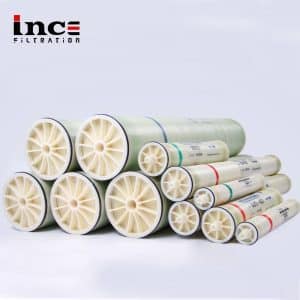
Compatibility with standard membrane housings is a key consideration in industrial installations. LP Reverse Osmosis Membrane Elements are designed to fit common industrial pressure vessels, allowing straightforward integration into existing systems.
When evaluating a membrane replacement, consistent dimensions and performance characteristics are essential. A well-matched Reverse Osmosis Membrane ensures that system parameters remain within validated ranges, minimizing the need for redesign or recalibration.
For facilities operating multiple RO systems, standardized Industrial RO Membrane specifications support simplified inventory management and easier replacement planning. This consistency helps maintain uninterrupted operation across different process lines.
Closing Paragraph
An LP Reverse Osmosis Membrane Element provides a practical solution for industrial water treatment systems that require reliable performance under moderate operating pressures. By combining stable separation efficiency, predictable pressure behavior, and compatibility with standard system designs, it supports balanced and controlled operation. As an Industrial RO Membrane, it plays a critical role in maintaining consistent water quality while managing energy use and maintenance demands. Within modern treatment systems, well-designed Reverse Osmosis Membrane technology remains a dependable foundation for long-term industrial water purification.