
Innovative Solutions for Enhanced Industrial Liquid Purification Systems
In the increasingly sophisticated landscape of industrial manufacturing, the requirement for consistent fluid purity has moved from a specialized need to a baseline operational standard. Processes ranging from the synthesis of fine chemicals to the high-volume production of beverages depend on the ability to remove particulates with absolute precision. Many facilities face the recurring challenge of balancing high flow requirements with the need for fine micron retention. Traditional depth filtration methods often struggle to maintain this balance, frequently resulting in rapid pressure increases and the need for frequent system shutdowns to replace clogged components. These interruptions not only increase the direct costs of consumables but also lead to significant labor expenses and production bottlenecks that can hinder a facility’s overall output and profitability.
To address these vulnerabilities, engineering teams are increasingly prioritizing filtration technologies that maximize available surface area without expanding the physical footprint of the system. The transition to a modern pleated filter cartridge represents a strategic shift toward high-capacity, low-maintenance operations. By utilizing a folded media architecture, these components provide a much larger contact area for the process fluid, which directly translates to a more efficient capture of contaminants and a more stable pressure profile. Selecting the right pleated filter cartridge involves a careful evaluation of material compatibility, micron requirements, and the specific hydraulic demands of the application. When correctly integrated, these advanced filtration elements provide a robust defense against contamination while ensuring that the production line remains active and efficient over longer cycles.
Structural Engineering and Media Composition
The fundamental design of a pleated filter cartridge is a marvel of industrial geometry, engineered to pack as much functional surface area as possible into a standard cylindrical format. By folding the filter media into a series of uniform pleats, manufacturers can increase the available filtration surface by up to several times compared to a non-pleated alternative of the same size. This architectural choice is critical because it significantly lowers the flux rate—the volume of fluid passing through a given area of media over time. A lower flux rate reduces the physical pressure on the fibers, which helps maintain the integrity of the pore structure and prevents the “breakthrough” of particulates even during surges in flow or pressure.
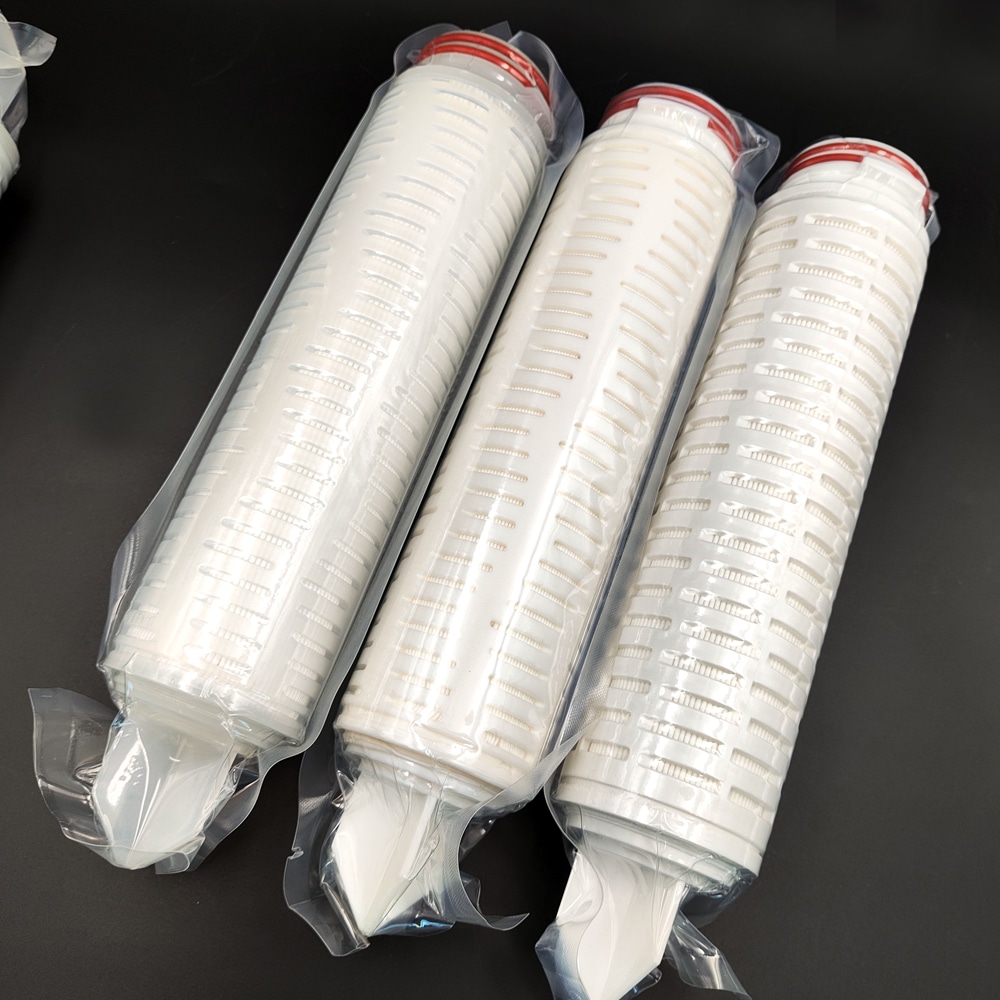
A standard pleated filter cartridge typically utilizes a multi-layered construction to achieve its performance goals. The core of the unit is usually a high-strength polypropylene or stainless steel support tube, which provides the necessary rigidity to withstand the differential pressures encountered during high-flow operations. Surrounding this core is the pleated media itself, which can be made from a variety of synthetic polymers, glass fibers, or membrane materials. These layers are often thermally bonded to the end caps and support cages, creating a completely integrated structure. This bonding process is essential because it eliminates the need for adhesives or surfactants that could potentially leach into the process stream, thereby ensuring that the filtration process itself does not introduce new contaminants into the fluid.
The media layers within the pleats are often arranged in a graduated density format, which allows for a more efficient distribution of the contaminant load. The outer layers of the pleated filter cartridge act as a pre-filter, capturing larger debris before it can reach the finer inner layers. This prevents the surface of the filter from blinding prematurely and ensures that the entire depth of the media is utilized for particle storage. Because the media is held in place by an outer cage and an inner core, the pleats remain stable and do not collapse or bunch together, even when the cartridge becomes heavily loaded with solids. This mechanical stability is a hallmark of high-quality filtration design, providing a predictable and reliable performance across a wide range of industrial conditions.
Technical Advantages and Operational Reliability
The primary performance advantage of the pleated filter cartridge lies in its exceptional dirt-holding capacity, which far exceeds that of traditional melt-blown or string-wound filters. Because the total surface area is so much larger, the cartridge can accumulate a significantly higher mass of particulates before the pressure drop reaches the terminal limit. This increased capacity is a direct result of the pleated geometry, which provides more “room” for particles to be trapped within the fiber matrix. For operators, this means that the intervals between filter change-outs are greatly extended, leading to a more consistent production environment and a substantial reduction in the total number of filters consumed annually.
Another critical benefit is the low initial differential pressure that these cartridges offer. When a new filter is installed, the resistance it provides to the fluid flow is minimal, which allows the pumping system to operate at a lower energy level. As the cycle progresses, the increase in pressure is gradual and linear, rather than the sudden spikes often seen with surface-loading filters. Utilizing a pleated filter cartridge typically results in a more efficient use of energy across the entire filtration cycle, as the pump does not have to overcome excessive resistance during the majority of the production run. This stability in flow and pressure is particularly important in processes where a consistent flow rate is necessary to maintain the quality of the final product.
The durability and chemical resilience of these components also distinguish them in demanding industrial settings. Whether the process involves the filtration of aggressive acids, alkaline cleaners, or high-temperature solvents, the service life of a pleated filter cartridge remains high due to the careful selection of resistant polymers. The thermal bonding techniques used in assembly ensure that the cartridge remains a single, robust unit even when exposed to thermal cycling or harsh chemical environments. This resilience reduces the risk of structural failure or bypass, providing peace of mind to facility managers who must ensure that their filtration stages are as reliable as the primary production machinery they protect.
Versatility Across High-Precision Industries
The wide-ranging compatibility of this filtration technology makes it suitable for an array of sectors where liquid clarity and purity are non-negotiable. In the water treatment and desalination industries, deploying a pleated filter cartridge in reverse osmosis (RO) pre-filtration systems is a standard method for protecting delicate membranes. By capturing silt, sand, and colloidal silica that would otherwise cause membrane fouling, these cartridges extend the operational life of the most expensive parts of the water treatment system. Their high flow capacity makes them ideal for large-scale municipal and industrial facilities where massive volumes of water must be processed without interruption.
In the food and beverage sector, the requirements for filtration are centered on biological safety and clarity. The application of the pleated filter cartridge in the production of bottled water, beer, and dairy products ensures that yeast, bacteria, and other unwanted particles are removed with high precision. Because the materials are often compliant with international food safety standards, manufacturers can integrate these filters into their lines without worrying about contaminating the flavor or safety profile of their products. The high surface area is especially valuable in high-viscosity applications, such as the filtration of syrups or oils, where maintaining flow can be challenging for standard depth media.
The chemical and pharmaceutical industries also benefit from the precision and low extractable profile of these filtration elements. In these sectors, the purity of solvents, catalysts, and intermediates is critical to the success of the final synthesis. A high-quality pleated filter cartridge provides a reliable barrier against particulates that could cause off-specification batches or interfere with sensitive chemical reactions. In pharmaceutical pre-filtration, these cartridges serve to clarify fluids before they reach more expensive final sterilizing-grade membranes, acting as a cost-effective protector that ensures the entire filtration train remains efficient and effective over long processing periods.
Economic Impact and Long-Term Value
When assessing the economic impact of filtration components, savvy procurement managers look beyond the initial purchase price to the total cost of ownership. While the unit cost may be higher than basic depth filters, the long-term benefit of investing in a pleated filter cartridge is clear. By extending the life of each filter and reducing the total number of units required, facilities can achieve significant savings on hardware and shipping. Furthermore, the reduction in waste disposal is an increasingly important factor in the overall economic calculation, as it lowers disposal fees and aligns with corporate sustainability goals by minimizing the environmental footprint of the manufacturing process.
The impact on labor efficiency and system downtime is perhaps the most compelling economic argument for this technology. Every time a system must be taken offline to replace a filter, it results in lost production time and the diversion of technical staff from other critical tasks. Because a pleated filter cartridge lasts significantly longer than conventional alternatives, the frequency of these maintenance events is drastically reduced. In high-output manufacturing environments, even a small reduction in downtime can lead to thousands of dollars in additional revenue per year. The ease of installation and the standardized fit of these cartridges also mean that change-outs can be performed quickly and accurately, further minimizing the impact on the production schedule.
Moreover, the protection provided to downstream equipment represents a significant form of risk management. Particles that bypass an inferior filter can cause catastrophic damage to high-pressure pumps, clog expensive spray nozzles, and foul heat exchangers. By providing a consistent and reliable particulate barrier, a pleated filter cartridge safeguards these high-value assets and prevents the need for emergency repairs and parts replacements. This reliability ensures that the entire industrial system operates at peak efficiency, reducing the likelihood of unexpected costs and ensuring that the facility can meet its production targets with confidence.
Quality Assurance and Customization Standards
Maintaining the highest standards of quality is essential for any filtration component used in critical industrial processes. The structural integrity of a pleated filter cartridge is verified through a series of rigorous tests during the manufacturing phase. These tests often include pressure resistance trials, integrity testing to ensure the absence of leaks in the pleated media, and flow rate analysis to confirm that the cartridge meets its specified micron rating. For industries with strict regulatory requirements, such as medical device manufacturing or ultrapure water production, these quality control measures provide the necessary documentation and assurance that the filtration stage will perform as expected.
Customization is another key strength of this product category, allowing the filters to be tailored to the specific needs of a facility. Customizing the pleated filter cartridge end-caps, O-ring materials, and overall length ensures that the hardware fits perfectly into existing vessels without the need for expensive system modifications. Whether a process requires a specific configuration like a code-7 fin or a double-open-end design, the flexibility of the pleated format allows for a bespoke solution. This adaptability is critical for facilities that operate legacy systems or those that have unique space constraints that prevent the use of off-the-shelf filtration hardware.
Ultimately, the choice of a high-performance filtration solution is a commitment to operational excellence. By focusing on advanced geometry, material purity, and structural durability, these components offer a level of reliability that supports the most demanding industrial applications. Utilizing a pleated filter cartridge remains one of the most effective ways for a facility to optimize its liquid processing stages, protect its capital investments, and ensure the highest standards of product quality across its entire operation. This strategic approach to filtration is a cornerstone of modern, lean, and profitable industrial manufacturing.
For operations seeking to enhance their current filtration performance and reduce the total cost of fluid purification, this specialized hardware provides a proven and efficient solution. The combination of high surface area and robust construction ensures that even the most complex particulate challenges are managed with precision.