
Enhancing Process Stability with Nominal Depth Pleated Filter Cartridges in Complex Fluid Systems
The pursuit of consistent fluid quality in high-volume industrial environments often requires a departure from traditional single-stage filtration methods. For operations managing fluids with a broad distribution of particle sizes, the primary challenge is not just removing debris, but doing so without causing frequent pressure spikes that destabilize the entire system. Standard surface filters often struggle with “premature blinding,” where a layer of fine particles quickly seals the media, while traditional depth filters may lack the surface area required for high-flow efficiency. To solve this, technical directors are increasingly implementing nominal depth pleated filter cartridges as a strategic solution that bridges the gap between high-capacity surface area and intricate internal trapping mechanisms.
By integrating nominal depth pleated filter cartridges into a multi-stage or standalone filtration system, facilities can achieve a more linear and predictable processing cycle. This design is specifically engineered for fluids that contain a mix of deformable and rigid contaminants, such as those found in chemical mechanical polishing (CMP) slurries, cooling water loops, and intermediate chemical processing. The goal is to move beyond simple “screening” and toward a sophisticated depth-loading process that preserves flow velocity while maintaining rigorous standards for particulate retention. Understanding the synergy between the pleated geometry and the internal fiber matrix is essential for any facility looking to optimize its filtration overhead and improve long-term system reliability.
Advancements in Hybrid Media Geometry
The unique performance profile of nominal depth pleated filter cartridges is rooted in their hybrid architectural design. While a standard pleated filter focuses almost entirely on surface capture, the “depth” component of these cartridges utilizes a thicker, multi-layered media web. This structure creates a tortuous path for the fluid, forcing it through varying densities of synthetic fibers. This means that particles are not just stopped at the entrance of the pore but are sequestered at different depths within the media folds. This internal trapping capability is what distinguishes nominal depth pleated filter cartridges from traditional flat-sheet pleated designs, offering a significantly higher tolerance for heterogeneous solids.
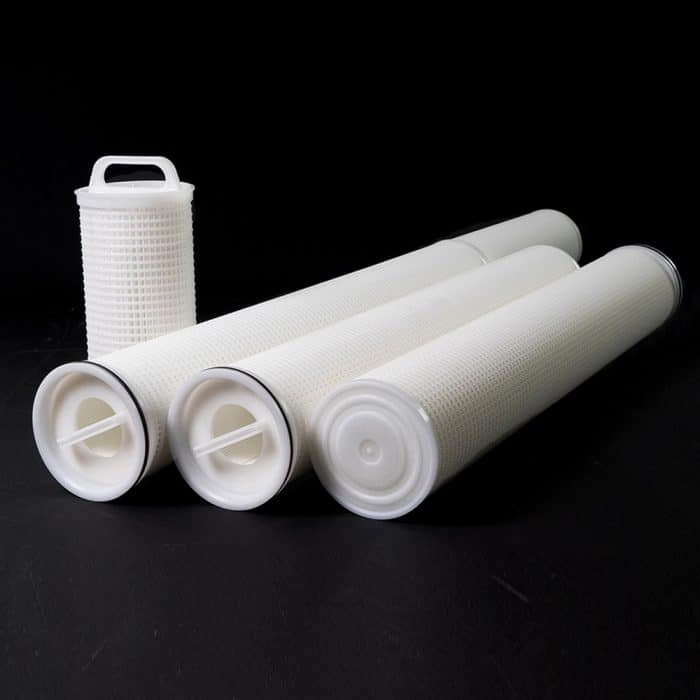
The pleat density in these cartridges is carefully calculated to balance the total surface area with the need for adequate flow channels between the folds. If the pleats are too tight, the fluid cannot effectively access the depth of the media; if they are too loose, the surface area advantage is lost. High-quality nominal depth pleated filter cartridges feature a stabilized pleat structure that ensures uniform flow distribution even as the cartridge becomes loaded with contaminants. This structural stability is supported by thermally bonded end caps and a rugged center core, which together prevent the media from shifting or compressing under hydraulic stress. This ensures that the nominal micron rating remains consistent from the beginning of the service cycle until the very end.
Furthermore, the materials used in nominal depth pleated filter cartridges are typically selected for their low extractable profiles and high chemical resistance. Polypropylene is the most common choice due to its inert nature, but specialty polymers are available for high-temperature or aggressive solvent applications. Because the media is manufactured using melt-blown or needle-punching techniques before being pleated, it possesses a naturally graduated pore structure. This allows nominal depth pleated filter cartridges to act as their own pre-filters, capturing larger debris on the upstream side and finer particles within the downstream layers, which is the key to their extended service life in demanding industrial circuits.
Strategic Impact on System Hydraulics and Maintenance
The impact of nominal depth pleated filter cartridges on the overall hydraulics of a processing system is profound. In a typical filtration setup, the pump must work against the resistance provided by the filter media. As the filter clogs, this resistance increases, often exponentially. However, the high surface area provided by nominal depth pleated filter cartridges ensures a lower initial differential pressure. This lower baseline resistance means the system operates further away from its critical pressure limit for a longer duration. For facilities that operate on tight margins, the energy savings from reduced pump head requirements can lead to a measurable reduction in utility expenditures over time.
Beyond energy, the predictability of the pressure rise is a major operational advantage. Because nominal depth pleated filter cartridges load contaminants throughout the depth of the pleats, the pressure drop increases at a steady, predictable rate. This allows maintenance personnel to move away from “reactive” filter changes—which often occur at the most inconvenient times—and toward a “scheduled” maintenance model. Utilizing nominal depth pleated filter cartridges reduces the risk of sudden flow cessation, which can be catastrophic in processes like continuous chemical dosing or cooling of sensitive electronics. The ability to forecast filter life with high accuracy directly supports lean manufacturing objectives and minimizes the labor overhead associated with unplanned downtime.
The reduction in change-out frequency also has a secondary benefit: reduced fluid loss. Every time a filter housing is opened, a certain volume of process fluid is lost or must be drained. In industries handling expensive chemicals, fragrances, or high-purity oils, the cumulative cost of this lost product can be significant. By choosing nominal depth pleated filter cartridges, which can hold up to three to five times more dirt than standard depth filters, the number of times the system must be drained is drastically reduced. This makes the filtration stage more efficient not just in terms of particle removal, but in terms of total material recovery and process yield.
Performance Resilience in Varied Industrial Workloads
In the field of industrial wastewater and reclaim systems, nominal depth pleated filter cartridges are valued for their ability to handle varying turbidity levels. Wastewater often contains a mix of organic matter, sand, and scale that can vary in concentration throughout the day. The depth-loading nature of these cartridges provides a “buffer” against these fluctuations. Unlike a surface filter that might fail instantly when hit with a slug of fine solids, the matrix within nominal depth pleated filter cartridges can absorb these shocks, maintaining a steady effluent quality and protecting downstream treatment stages like carbon beds or ion exchange resins.
The electronics manufacturing sector also utilizes these cartridges for the filtration of cooling loops and deionized water systems. In these environments, the removal of abrasive particulates is essential to prevent micro-scratches on sensitive components. Nominal depth pleated filter cartridges provide the necessary retention efficiency while allowing for the high flow rates required for rapid cooling. The thermal bonding and absence of binders ensure that no surfactants or plasticizers are introduced into the ultrapure water stream, which is a non-negotiable requirement for semiconductor and display panel manufacturing. The resilience of the pleated structure ensures that the filter does not shed fibers even under the high-velocity conditions common in these systems.
Moreover, in the petrochemical and refining industries, nominal depth pleated filter cartridges are used to clarify fuel, lubricants, and intermediate distillates. These fluids often contain paraffin waxes or asphaltenes that can quickly blind surface-type filters. The multi-layered depth media within the pleats is uniquely suited to trapping these deformable contaminants, allowing the fluid to continue flowing through the open pore structure even as the internal matrix fills. This ability to handle “sticky” or non-rigid particulates makes nominal depth pleated filter cartridges a superior choice for hydrocarbon processing where traditional filtration methods often fall short and lead to excessive maintenance costs.
Economic Sustainability and Total Cost of Ownership
When analyzing the economic value of filtration, the initial purchase price is often a deceptive metric. The true value of nominal depth pleated filter cartridges is realized through their impact on the “Total Cost of Ownership” (TCO). This includes the cost of the cartridge, the labor for replacement, the cost of downtime, the energy consumed by the pump, and the cost of waste disposal. Because nominal depth pleated filter cartridges process a much higher volume of fluid per unit, the cost per gallon filtered is significantly lower than that of cheaper, less efficient alternatives. For a large-scale facility, the annual savings from switching to high-capacity pleated depth media can reach tens of thousands of dollars.
Environmental sustainability also plays a role in the economic equation. Each spent filter cartridge represents waste that must be managed, often as hazardous waste depending on the fluid filtered. By utilizing nominal depth pleated filter cartridges, a facility can reduce its total filter waste volume by 60% to 80%. This reduction in the “waste stream” not only lowers disposal fees but also supports corporate environmental, social, and governance (ESG) goals. In an era where industrial waste is under increasing regulatory scrutiny, the efficiency of the pleated depth design provides a practical way to reduce the environmental footprint of the filtration process without sacrificing performance.
Operational Insight: To maximize the economic benefits, it is recommended to monitor the differential pressure continuously. By changing nominal depth pleated filter cartridges exactly at the manufacturer’s recommended terminal pressure, rather than on a fixed time schedule, operators ensure they are utilizing the full dirt-holding capacity of the media, thereby squeezing every bit of value out of each cartridge.
Quality Standards and Precision Engineering
The production of nominal depth pleated filter cartridges is governed by strict quality control protocols to ensure that every unit meets its designated performance specifications. This includes testing for micron retention efficiency, burst strength, and clean pressure drop. High-performance cartridges are often manufactured in ISO-certified environments, ensuring that the media is free from contaminants and that the thermal bonds are consistent. This level of precision is vital for industries where a single filter failure could result in the loss of an entire batch of high-value product. When sourcing nominal depth pleated filter cartridges, procurement teams should prioritize suppliers that provide detailed technical documentation and validation guides.
Customization is another advantage of this product category. Depending on the specific housing requirements, nominal depth pleated filter cartridges can be outfitted with various end-cap styles, such as 222 or 226 O-ring configurations, to ensure a perfect, bypass-free seal. The selection of O-ring materials like Viton, EPDM, or Silicone allows for tailored chemical compatibility. This flexibility ensures that the filtration system can be optimized for the unique temperature and chemical stresses of the application, providing a bespoke solution that enhances the overall reliability of the industrial process. The ability to fine-tune the filter hardware to the specific site conditions is what allows high-performance facilities to maintain their competitive edge.
In conclusion, the strategic use of nominal depth pleated filter cartridges represents a sophisticated approach to industrial fluid management. By combining the surface area of a pleated design with the high-capacity retention of depth media, these cartridges offer a level of performance that standard filters cannot match. They provide a robust defense against system instability, reduce the total cost of ownership, and support the high-purity requirements of modern manufacturing. For any operation looking to stabilize its process hydraulics and minimize maintenance overhead, investing in high-quality pleated depth technology is a clear path to improved operational efficiency and long-term success.