
Engineering Efficiency with Ultipleat High Flow Filter Technology for Large-Scale Systems
In the rigorous landscape of industrial fluid management, the ability to process high volumes of liquid while maintaining absolute purity is a constant engineering challenge. Traditional filtration systems often rely on dozens, or even hundreds, of small-diameter cartridges to achieve necessary flow rates. This “multi-cartridge” approach frequently results in complex vessel designs, high maintenance labor, and an increased risk of bypass due to the sheer number of seals involved. As facilities seek to optimize their operations, the move toward ultipleat high flow filter technology has become a definitive solution. This design philosophy focuses on maximizing the throughput of a single element, allowing a much smaller footprint to manage the same capacity that previously required an entire bank of conventional filters.
The core of this efficiency lies in the transition from standard 2.5-inch diameters to a much larger 6-inch format, combined with advanced pleat geometry. By integrating an ultipleat high flow filter into the process line, operators can drastically simplify their filtration hardware. The “inside-to-outside” flow path ensures that all contaminants are trapped within the cartridge itself, preventing debris from falling into the clean side of the housing during change-outs. For industries where uptime is the primary driver of profitability, such as power generation, desalination, and large-scale chemical processing, this high-capacity technology provides the necessary reliability to protect downstream assets like membranes and high-pressure pumps.
Structural Innovation: The Crescent Pleat Geometry
The technical superiority of the ultipleat high flow filter is rooted in its patented crescent-shaped pleat geometry. In standard pleated filters, the folds are often crowded at the center core, which creates uneven flow distribution and wastes a significant portion of the filter media. The crescent design allows for a much tighter and more uniform packing of the media layers. This optimization ensures that every square inch of the filter material is utilized effectively, leading to a more consistent flux rate across the entire surface. This structural stability is essential for maintaining absolute particle retention even as the pressure differential increases throughout the service cycle.
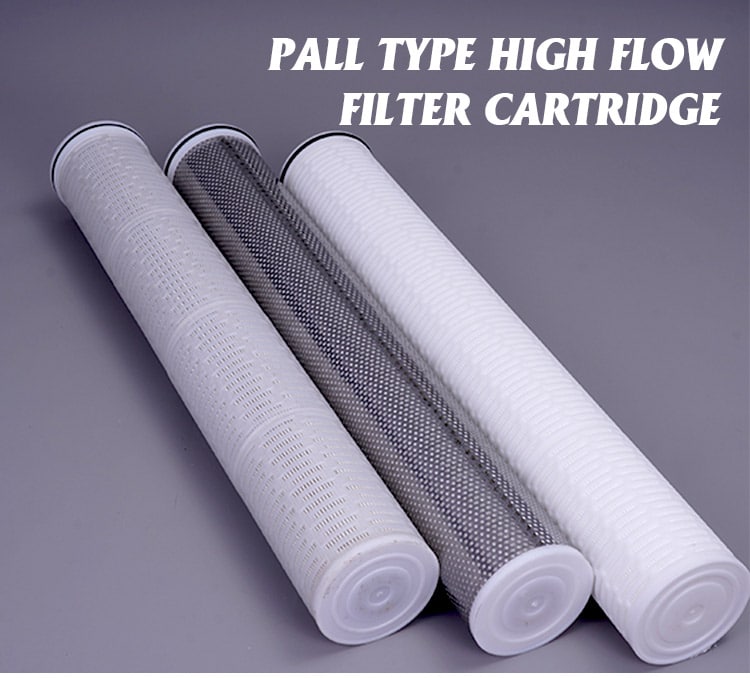
Beyond the pleat shape, the construction of an ultipleat high flow filter typically utilizes a coreless design. This approach not only reduces the weight of the element, making it easier for a single operator to handle, but also simplifies the waste disposal process. Because the elements are often made entirely of a single polymer—usually high-purity polypropylene—they can be easily shredded or incinerated, significantly reducing the environmental footprint of the facility. The absence of a permanent center core also means there is more room for the fluid to flow, further enhancing the high-flow characteristics that define this product category.
The mechanical integrity of the ultipleat high flow filter is reinforced by heavy-duty outer cages and thermally bonded end caps. This “all-welded” construction eliminates the need for adhesives or resins that could fail under chemical or thermal stress. Whether the system is subjected to hydraulic shocks or varying flow velocities, the pleated media remains securely in place, ensuring that the micron rating is never compromised. This level of durability is critical in industrial environments where the cost of a single filtration failure can reach thousands of dollars in damaged equipment or lost product batches.
Performance Advantages and Hydraulic Stability
One of the most compelling reasons to specify an ultipleat high flow filter is its exceptional dirt-holding capacity. Because of the expanded surface area and the depth-loading characteristics of the multi-layered media, these cartridges can retain a massive volume of solids before reaching the terminal pressure drop. In many applications, a single 60-inch high-flow element can replace up to 40 standard 10-inch melt-blown cartridges. This 40-to-1 ratio is a game-changer for maintenance teams, as it reduces the number of seals that must be checked and the number of elements that must be inventoried.
The hydraulic profile of the ultipleat high flow filter also contributes to overall system health. A lower initial pressure drop means the pumping system consumes less energy to move the fluid through the filtration stage. As the filter loads, the increase in resistance is gradual and predictable. This allows for a more stable processing environment, preventing the sudden “slugs” of pressure that can disturb sensitive downstream equipment. By maintaining a low flux rate even at high total flow volumes, the ultipleat high flow filter ensures that particles are captured deep within the fiber matrix, preventing the “unloading” of contaminants that can occur in lower-quality filtration hardware.
Furthermore, the “inside-to-outside” flow pattern inherent in the ultipleat high flow filter design provides a cleaner maintenance experience. When the filter is spent, the contaminants are contained within the cartridge core. This means that when the element is pulled from the housing, there is no risk of dirt falling into the downstream piping. This design feature is particularly valuable in industries like food and beverage or electronics manufacturing, where the highest standards of hygiene and purity are required. The specialized seal—often a high-performance O-ring or U-cup—ensures that the cartridge is seated perfectly every time, eliminating the risk of bypass.
Applications in High-Volume Industrial Sectors
The versatility of the ultipleat high flow filter makes it an ideal choice for the most demanding water treatment applications. In seawater reverse osmosis (SWRO) plants, these filters act as a critical pre-treatment stage to protect the desalination membranes from fouling. By removing silt, organic matter, and fine sand with absolute precision, the high-flow elements extend the life of the RO membranes and reduce the frequency of expensive chemical cleanings. The ability to handle thousands of gallons per minute within a relatively small vessel footprint makes this technology indispensable for municipal and industrial water production facilities.
In the power generation industry, the ultipleat high flow filter is used for condensate polishing and cooling water filtration. Protecting the boiler tubes and turbines from scale and particulate erosion is essential for maintaining plant efficiency. The high thermal resistance of the polypropylene media allows these filters to handle the elevated temperatures often found in power plant return loops. Similarly, in the oil and gas sector, these filters are used for produced water injection and refinery process streams, where they must handle aggressive fluids and high solids concentrations without failing.
The electronics and semiconductor industries also rely on the ultra-clean performance of the ultipleat high flow filter for their ultrapure water (UPW) systems. In these environments, even sub-micron particles can cause catastrophic failure in microcircuitry. The absolute retention ratings of high-flow technology ensure that the water used for rinsing and etching remains at the highest purity levels. The low extractable profile of the virgin polypropylene construction ensures that no organic carbon or surfactants are added to the water stream, maintaining the strict chemical tolerances required for advanced semiconductor manufacturing.
Economic Value and Long-Term Operational Gains
When evaluating the total cost of ownership, the ultipleat high flow filter provides a superior return on investment compared to conventional filtration methods. The most immediate saving is found in labor costs. Because there are fewer elements to change, the time required for a filter swap is reduced from hours to minutes. This allows maintenance staff to focus on other critical areas of the plant, improving overall labor productivity. Additionally, the smaller footprint of the high-flow vessels reduces the initial capital expenditure for the filtration hardware and saves valuable floor space in the facility.
The reduction in waste disposal is another significant economic factor. Because the ultipleat high flow filter has a much higher dirt-holding capacity, the total number of filters sent to the landfill or incinerator each year is drastically reduced. This not only lowers disposal fees but also aligns with corporate sustainability initiatives. In many jurisdictions, the cost of disposing of used filter elements—especially those that have processed hazardous chemicals—is rising. By minimizing the volume of waste generated, facilities can mitigate these rising costs while simultaneously improving their environmental profile.
Operational Insight: To achieve the best results with an ultipleat high flow filter, it is essential to use a high-quality housing specifically designed for high-flow elements. These housings feature specialized internal baskets that support the element and ensure a perfect seal. A properly matched filter and housing combination is the only way to guarantee that the absolute micron rating is achieved in a real-world production environment.
Quality Assurance and Technical Reliability
To ensure that every ultipleat high flow filter performs according to its specifications, manufacturers adhere to rigorous quality control standards. This includes multi-pass testing to verify the beta ratio and retention efficiency of the media. For highly regulated industries, such as pharmaceuticals or food production, the filters are often manufactured in cleanroom environments and are compliant with FDA and EU regulations for food contact. This level of quality assurance gives procurement managers the confidence that the filtration stage will not be a source of variability in their production process.
Customization is also a key feature of the ultipleat high flow filter market. Cartridges are available in various lengths, typically 20, 40, and 60 inches, to accommodate different flow requirements and vessel sizes. Different media types can be selected based on the chemical and thermal conditions of the fluid, from standard polypropylene for general water use to glass fiber for higher temperatures or oil-field applications. This flexibility allows engineers to fine-tune their filtration systems for the best possible balance of flow, retention, and service life, ensuring that the ultipleat high flow filter provides the most efficient solution for their specific industrial challenge.
In conclusion, the adoption of ultipleat high flow filter technology represents a strategic investment in process efficiency and system reliability. By maximizing the surface area and dirt-holding capacity of each element, this technology allows industrial facilities to handle higher volumes with fewer resources. The combination of structural durability, hydraulic stability, and absolute retention makes it the preferred choice for modern, high-capacity liquid processing. As industrial standards for purity and sustainability continue to rise, the high-flow filter will remain a cornerstone of effective and economical fluid purification.
Would you like me to help you compare the housing footprint requirements of an ultipleat high flow filter system against your current multi-cartridge setup?